
Write Now!
Refine later

“It’s all in the art. You get no credit for living.” —V. S. Pritchett
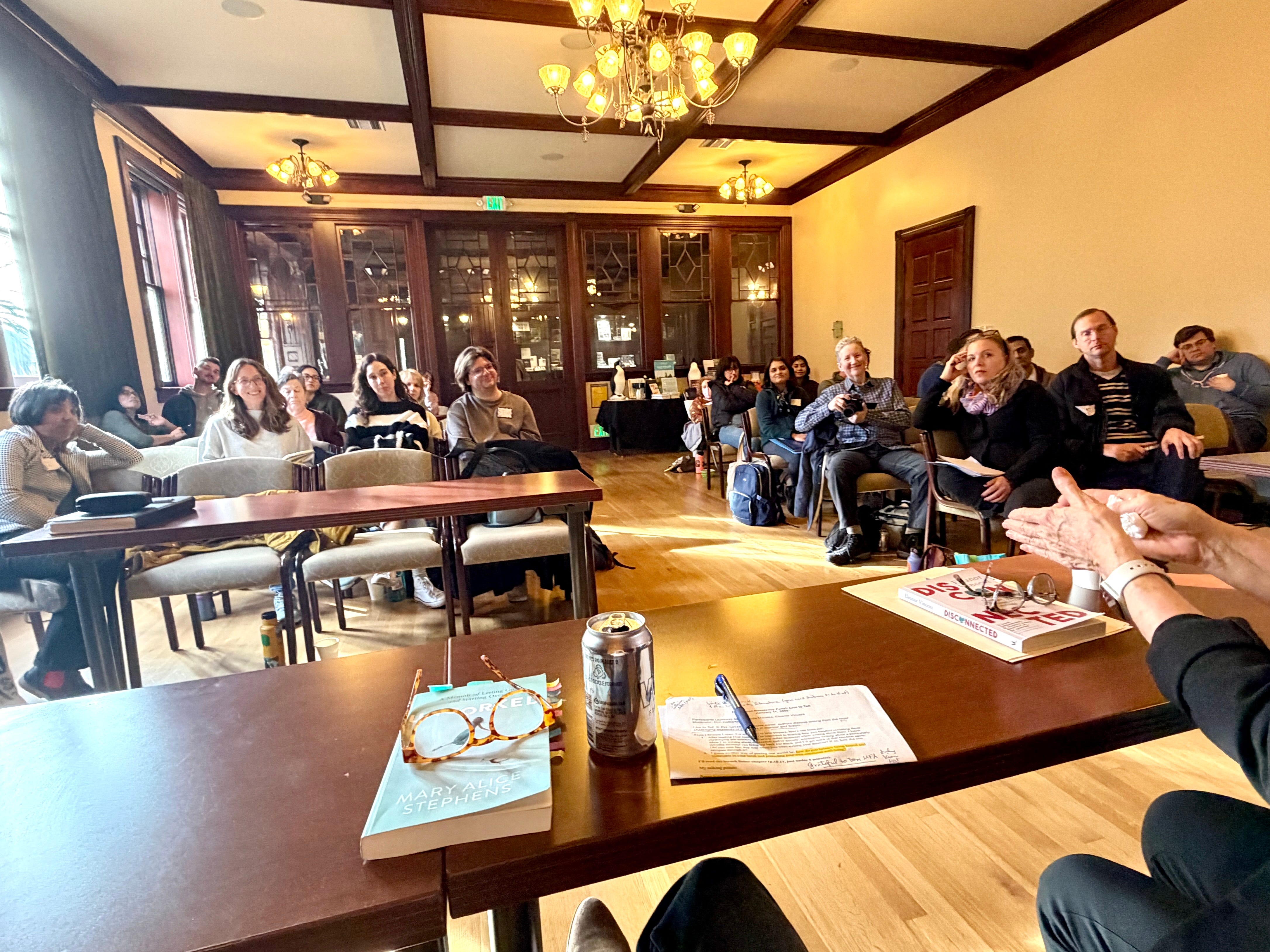
My “social worker side” inevitably emerges in my writing; it also informs how I talk about craft with emerging writers. Recently I spoke with a cohort of creative writing students in the MFA program at Dominican University and remembered how much I love talking about the process of writing, and delving into the messy issues one confronts when writing an intensely personal story.
Certainly, mining the raw materials of experience to craft stories can be challenging. Vivian Gornick writing in The Situation and the Story: The Art of Personal Narrative confronts this dilemma head on. Teasing out the situation (what happens) from the story, (the underlying meaning or theme) is the memoirist’s major job, emerging as the narrative evolves.
“What happened to the writer is not what matters; what matters is the large sense that the writer is able to make of what happened,” Gornick writes. (For more about this visit Ronit Plank at “Let’s Talk Memoir” to view her interview with Gornick.)
It is in the process of sense making that the memoir takes flight. But reaching that lofty altitude – distant enough to see meaning and transmit it to the reader – takes effort and time. Often, when I speak about writing a powerful memoir, I advise writers to gain enough distance from events to become free of outrage, clear of unresolved trauma. A tall order!
I did not take my own advice in writing my memoir Disconnected: Portrait of a Neurodiverse Marriage (Vine Leaves Press, 2024). I confessed this to the upturned faces of the MFA students – there were a few smiles.
As I wrote the book, I was living through a high conflict marriage to a partner presumed to be on the autism spectrum. My day-to-day experience confused, saddened, and infuriated me. I was so baffled by what felt like a total reversal of my husband’s personality – solicitous and caring during our courtship, and then cold and withdrawn soon after we married – that I could only process it through writing.
We attempted marital therapy three times with mixed results, and since my husband masked with the therapists, it was difficult for me to receive the support I desperately needed.
I found it, instead, in an advanced craft class on Zoom taught by Elizabeth Stark. Week by week I shaped my experiences into readable prose and got immediate feedback from my fellow students. That effort saved my sanity.
The book evolved in tandem with the marriage. I first began it during our courtship. At that point, I saw it as a Nora Ephron-style tongue in cheek portrait of two quirky older people in love. It was called “Better Late.” As our miscommunication and disconnection grew, I changed the title to “Space and Grace,” an apt phrase I learned from an autism relationship coach as a strategy for recovering my sense of self.
Ultimately, as it became clear that my husband was unwilling or unable to participate in saving our marriage, I changed the title to “Disconnected.”
From that point on, the book went through another three drafts, working with a writing partner, a developmental editor provided by Vine Leaves, and then incorporating final copyediting changes. Some chapters were rewritten upwards of ten times.
This is my usual approach. I like to reverse engineer my work; I enjoy revising. As one writer said, “I’m not a great writer, but I am an excellent reviser.”
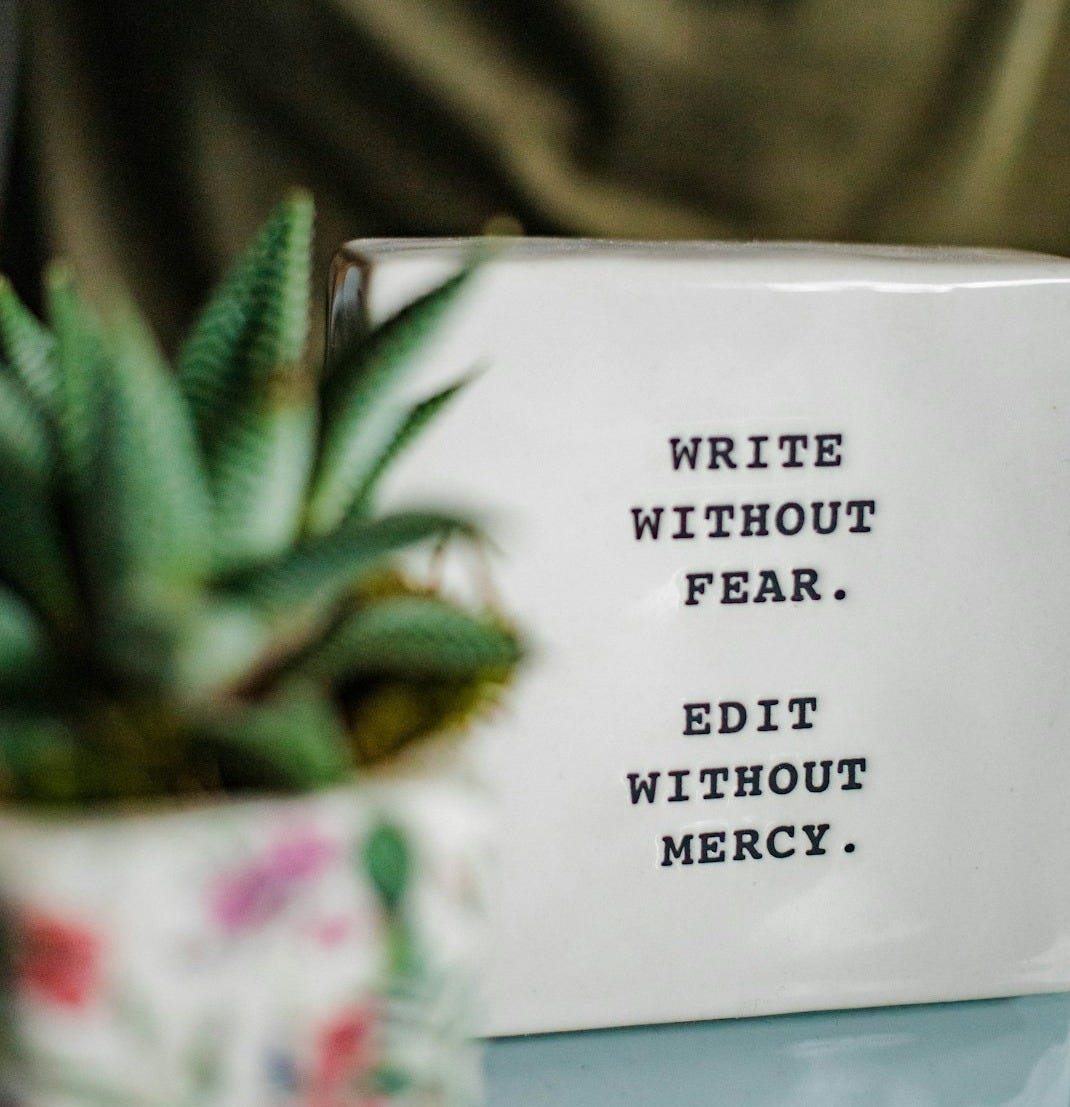
Before it was all done, I had a plot map, and sticky notes with the opening and closing visual images of each chapter. I went through the manuscript by hand highlighting each verb. If I found a flabby one, it had to go!
Nothing concentrates the mind like a publishing deadline. During the final six months, while in the midst of a contentious divorce, I wrote and rewrote. As one of my mentors, the poet Ellen Bass reminded me, “No book is ever truly finished, it is simply abandoned.”
I gave it my all, and yet when I read from it today, I see things I would change. It’s probably for the best that I can’t keep refining the prose. The real value of Disconnected is its immediacy and its raw honesty.
For the many people (mostly women, but some men) who are deeply lonely and confused in their neurodiverse relationships, my book is a blow-by-blow account that will affirm their experience, show them that they are not crazy, and that their perceptions and needs are valid.
But I hope it does more. I want it to shed light on the tragic dance of the neurodiverse couple and show how two people with the best of intentions, who love each other deeply, can miss one another totally because they are speaking different languages, causing each other unintentional hurt.
Writing the book helped me let go, and that was the kindest thing to do for myself and my husband. As Winston Churchill famously said, “When you are going through hell, keep going.”
For those writers attempting memoir, I say find what works for you, and if, like me, you are compelled to write in the white-hot cauldron of experience, go for it. You can refine it later.
So beautiful, Eleanor. So deeply examined and understandable. Thank you for the grace you have given each of us by sharing your profoundly difficult journey.
How valuable your talk must have been, and is for the students at Dominican University, Eleanore! Your candid clarity, lessons learned and passed on, all of that, priceless.